
A Knowledge Reading of a Morning Path in the Old City
How Jerusalem takes shape from market sounds, worshippers' steps, and gate names before it becomes a ready-made image.
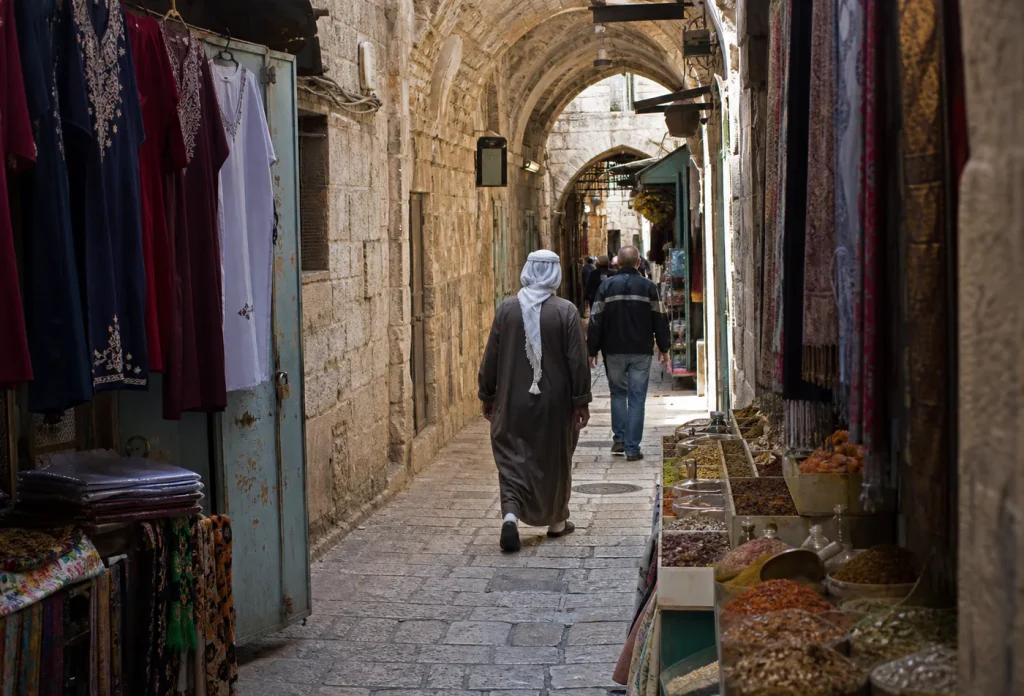
In the early morning hours the Old City is read by movement, not by the map alone: vendors opening shops, worshippers crossing toward the Haram, light falling on Jerusalem stone and coloring the walls in a familiar warm tone. This text is not a tourist guide, but an attempt to link the daily path with the names of gates and alleys.
From gate to market
Damascus Gate on the northern side is among the entrances most present in daily life. From it paths branch toward the markets and then toward routes closer to Al-Aqsa Mosque. The gate here is not a void in the wall; it is a point that organizes movement and trade.
Why does the daily path matter?
Jerusalem knowledge is not preserved in books alone. It is also in how people cross from gate to quarter, and from market to prayer hall. When we name the place while walking, we reduce the chance of shrinking it to a single landmark.
- Notice the gate’s name before you take the photograph.
- Distinguish the visible Ottoman wall from older layers.
- Use landmark pages to complete the reading.
Closing
The morning path is an exercise in slow reading. It can be completed from the Old City, gates, and markets pages in the Jerusalem section.